
THE POWER OF A PARADIGM
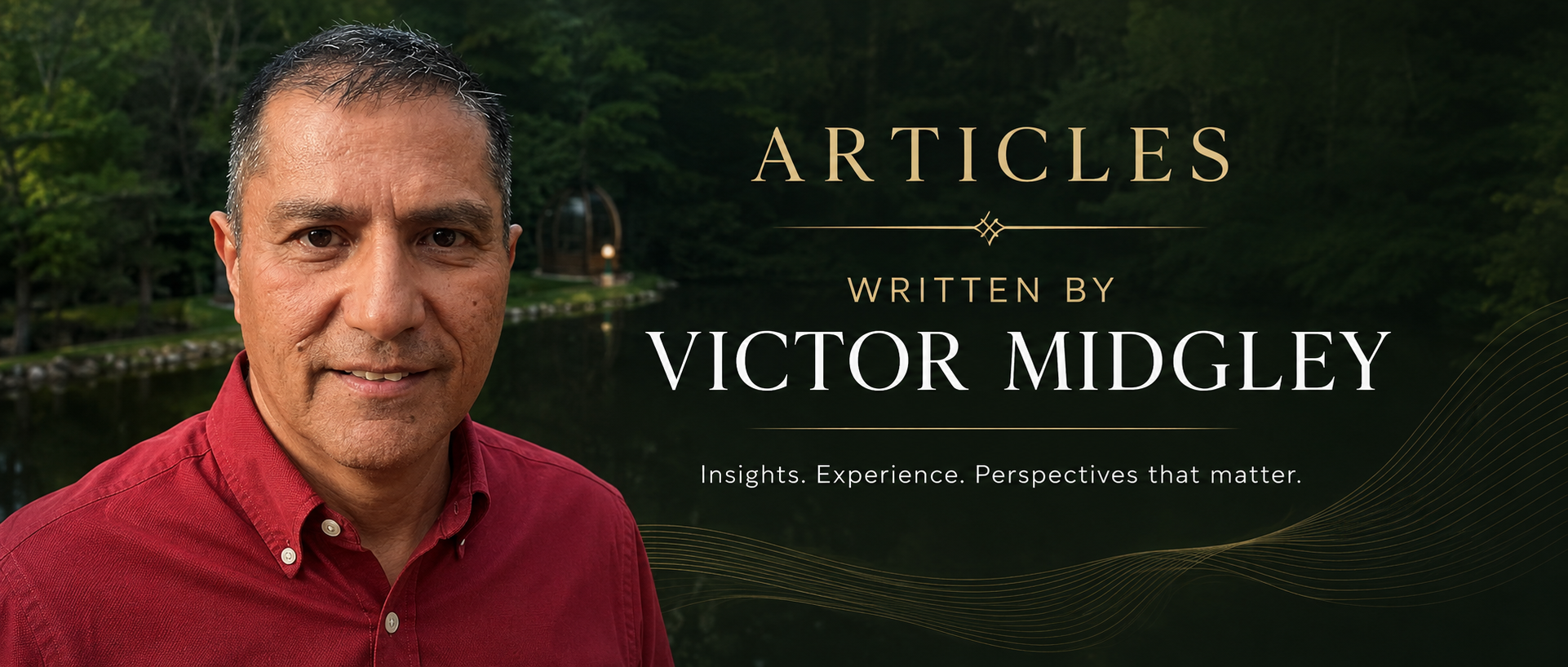
By Victor Midgley:
A paradigm is a model that consists of habits that are based on personal standards that can be repeated to produce a specific result. In other words, “A paradigm can be understood as a framework or model that guides our thinking and actions within a particular field or discipline. It provides a set of shared beliefs and assumptions that shape how we perceive and interpret the world.”
Bob Proctor said, “Did you know that most the information you are operating with that's been programmed into your paradigm is false?” How is it possible that this can happen? It’s possible because we decide it’s going to happen.”
At its core, a paradigm is a habitual process for thinking and behaving that leads to the results you get in life. Everyone operates throughout their daily life with a paradigm. It’s just a matter of whether yours works for you or against you. You will become more effective, productive, creative, and even earn more abundance and prosperity when you design an appropriate paradigm that works for you.
Whether you believe in paradigms or not, you are operating every day on the principle of a paradigm. Even if you are not aware of it, the paradigm you embedded into your subconscious is in full swing and is controlling every thought, action and result you experience even at this very moment. For better or worse, you are subject to the program of your paradigm. If you don’t like the result you are receiving in your life, then you must change your paradigms program. How to change your paradigm first requires understanding how it came to be in the first place.
You likely didn’t consciously create your paradigm. Instead, genetic and environmental conditioning shaped it. From the beliefs passed down by your parents to the experiences you absorbed as a child, your subconscious mind stored these influences without resistance.
Dr. Joe Dispenza believes that paradigms are heavily influenced by the values we hold. These paradigms are essentially hard-wired thought patterns that dictate our responses to situations.
Esther Hicks in her teachings emphasizes the power of how paradigms attract desired outcomes. She suggests that our current beliefs and thought patterns (or our paradigm) shape our experiences, and by consciously modifying our paradigm, we can create positive changes in our lives. This involves understanding and challenging limiting beliefs, embracing a new perspective on us, the world, and the Law of Life, and aligning our thoughts and feelings with our desired realities.
Proctor taught that to change your life, you must overwrite your subconscious programming: Repetition: Replace old habits and beliefs by repeatedly feeding your subconscious mind new information, such as daily affirmations. Conscious Replacement: You must deliberately choose and practice a new, positive habit to replace an old, limiting one. Nature abhors a vacuum, so an eliminated habit must be substituted. Raise Your Standards: Treat the paradigm like an internal thermostat and refuse to accept conditions that fall below your new expectations.
Here’s a question many people wrestle with: If what people assume to be average results are sub-par, why are they so popular? It’s because most people have ingrained beliefs that are extremely hard to overcome. You’d think they’d want nothing more than to break free from their mundane and mediocre existence, but they continue to stroll through their lives, accepting their results as if there’s nothing they can do about it. They refuse to believe there is more or better.
A paradigm is often a collection of beliefs that are held by a group of people. It can be likened to a mental program being installed in your subconscious mind.
People tend to underestimate the power of their paradigm even though they have almost exclusive control over their habitual behavior. They think using their willpower is enough to change habits they have had all of their life.
It’s not surprising when you consider that virtually all of your behavior is habitual. From the moment you get out of bed each morning until your head hits the pillow at night, almost everything you do is part of an automatic routine. That’s why it requires more than willpower to change these deeply ingrained routines.
To ignore the power of paradigms is to put yourself at risk when exploring the future. Your future will look much the same as the past until you understand the power of your paradigms and what it takes to change them.
The best way to identify your paradigm is to look at your current results. I encourage you to take a few moments to picture your life and consider the following questions …
How does your day begin?
What’s the most money you have ever made in a year?
Are you living the way you really want to live? If not, why not?
Answering these and similar questions will help you zero in on your paradigm, what’s controlling the results you are getting in your life, and identify which habits are working for you and which are working against you.
The good news is if you’re not happy with your results and you’d like to do better, you can do something about it. You can’t change your paradigm with self-will alone. In fact, there are only two ways to do it.
One is an emotional impact—when something hits you so hard, your life will never be the same. It’s usually negative, but it can also be positive.
The second way is to change the paradigm in the same way it was formed—through the repetition of ideas. It is repeatedly exposing yourself to a new idea to replace an old belief in your subconscious mind.
To get started, choose a new belief that is aligned with the results you want and the habits that will lead you to those results. Then impress that idea—by focusing on it, visualizing it, and repeating it with feeling (as if you already have what you want)—on your subconscious mind repetitively.
You must also consciously and deliberately replace “bad” habits with good habits. Otherwise, you might form another bad habit to take the old habit’s place.
Changing just a tiny part of the old paradigm can make an enormous difference in the results you enjoy in every area of your life.
But make no mistake. You cannot change your life permanently until you change your paradigm.
In conclusion, you will want to give deliberate consideration concerning your paradigm and how you will design a model that works for you. I suggest you start with your standards, which are the things you value most. Standards are the benchmarks we set for ourselves that determine the quality of our lives. Think about what your standards currently look like and then consider what it would take to raise them. Raising your standards means refusing to tolerate less than you desire in any area of your life.
If you feel like you’re doing all the right things to achieve your goals and get to where you want to be in life, but still can’t seem to get there? The problem isn’t you. It’s your paradigm. If you want to change your results and change them forever, changing your paradigms is the only way to do it. When that change happens, everything will become different!